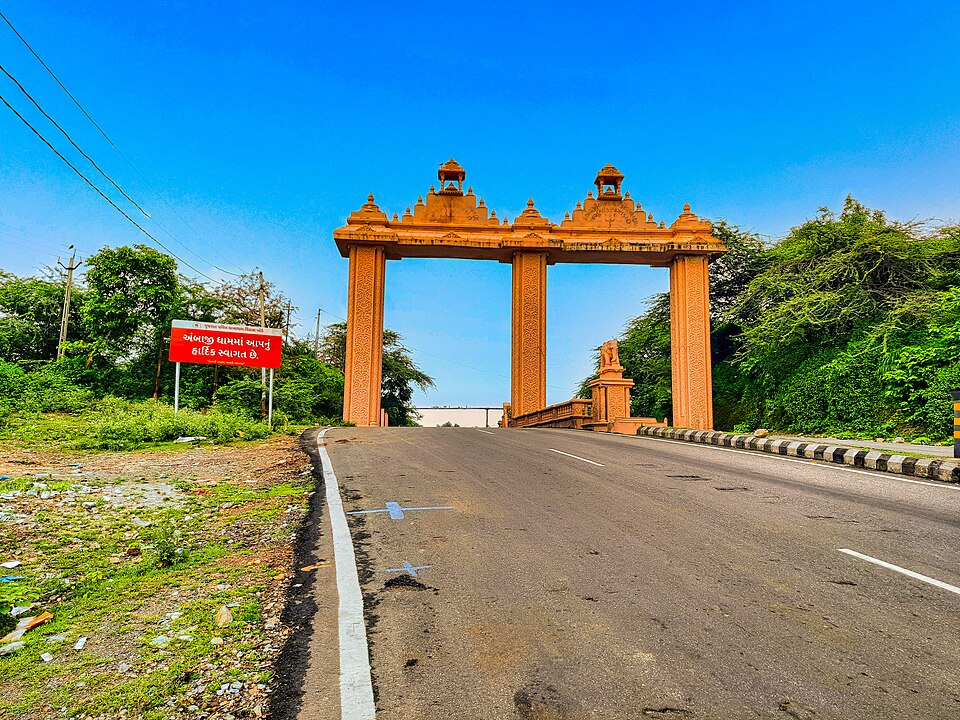
Ambaji in northern Gujarat is a major centre of Goddess worship. Its town temple and nearby Gabbar hill are closely connected in devotional accounts, but they are separate places. Understanding that distinction is the first step towards reading the shrine’s history or planning an unhurried visit.
The town shrine
Gujarat Tourism describes Ambaji through its Goddess tradition and the worship of a sacred yantra. This differs from the expectation that every sanctum centres on an ordinary sculpted image. A photograph of a decorated devotional form should not automatically be described as a direct photograph of the yantra itself.
Details of restricted ritual practice require a reliable temple source. This introduction does not claim to reveal a secret diagram, count its syllables or describe ceremonies that the writer has not witnessed. Those claims would need more evidence than an attractive photograph or a repeated online story.
Gabbar hill
Gabbar belongs to the same pilgrimage landscape, while offering a different setting from the town temple. Visitors should treat it as another stop with its own access arrangements. A reference to the original seat of the Goddess is a devotional identification, not an archaeological date for a surviving structure.
For a family visit, check how each person will manage the hill approach and confirm available transport directly. Do not assume that an old reference to a ropeway or a particular schedule describes today’s service. Leaving time between the two stops is more useful than trying to fit both into a rigid timetable copied from an undated article.
Reading accounts of the pilgrimage
The Sati narrative, the history of the present temple and the experience of contemporary pilgrims answer different questions. A source may be valuable for one and weak for another. A tourism description can orient a visitor, while a dated inscription or temple publication may be needed for a building history.
Images and respectful observation
Look for captions that name either the town temple or Gabbar. Follow local photography restrictions and avoid photographing people at prayer without permission. A useful personal record notes where a photograph was taken and what was actually visible, without turning that observation into a claim about unseen rituals.