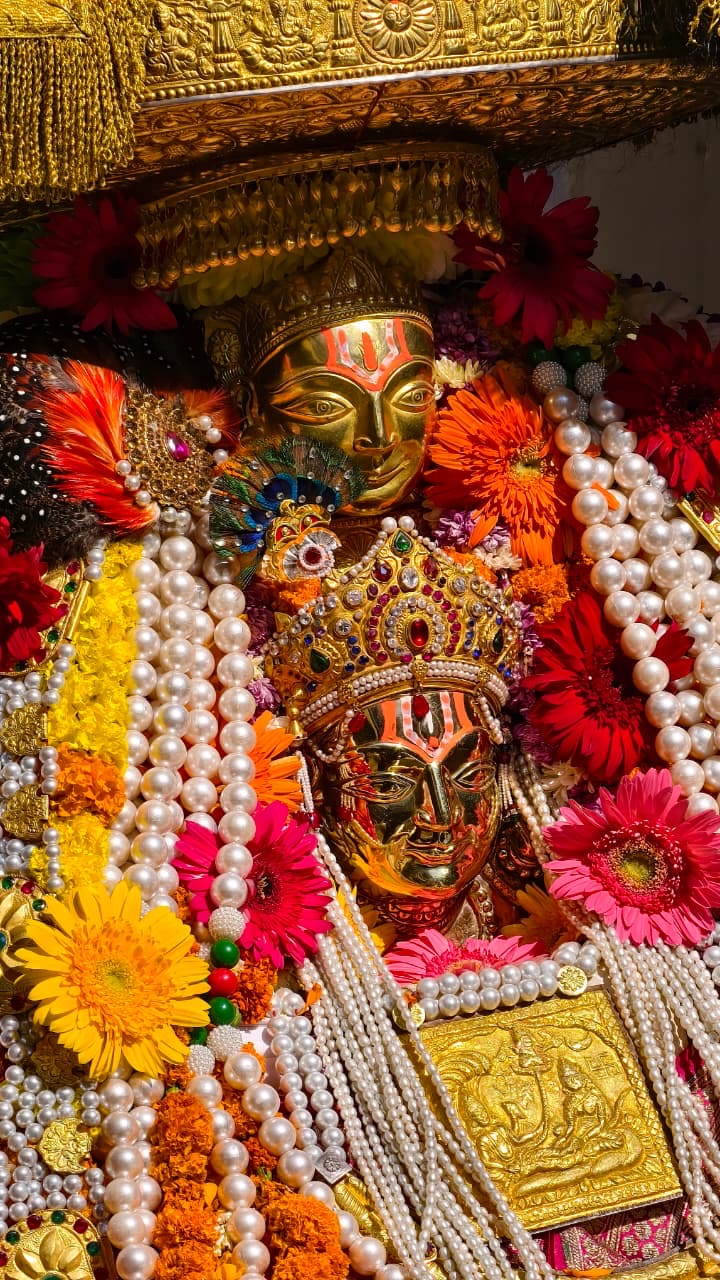
Kullu Dussehra has a rhythm that surprises visitors familiar with a one-evening finale. The local celebration begins on Vijayadashami and continues as a week-long gathering. Its focus on Raghunathji and the participation of local deities gives the festival a character that should be understood within the Kullu valley's traditions.
A gathering of local sacred communities
The official festival account describes deities arriving with their attendants and musicians at Dhalpur. These are not simply decorative floats brought together for a parade. They represent relationships between places, temples and the communities that maintain them.
A visitor can appreciate the visual richness while also recognising that the order of movement and the treatment of each palanquin carry local meaning. Ask before assuming that an unfamiliar gesture is only a performance for tourists.
Raghunathji and the procession
Raghunathji is central to the festival's ceremonial life. The official account describes preparations and a rath procession involving the deity, priests, attendants and the royal family's ritual role. It is more accurate to follow that local explanation than to describe every Dussehra procession with the same words.
The rath, palanquins and individual shrines have different functions. Photograph captions should name what is actually depicted rather than labelling every image simply 'Rama's chariot'.
Why the timing matters
Someone who arrives expecting the festival to end on Vijayadashami may miss its continuing activities. Conversely, a week-long programme does not mean that every event takes place daily. Consult the current schedule before making travel arrangements.
Leave space in the visit for the town's ordinary movement as well as the celebration. Roads, accommodation and viewing areas can be busy, and residents still need access to their homes and work.
Watch with patience
Stay clear of the path of people carrying ceremonial objects. Do not touch a palanquin or sacred ornament without an invitation. A little distance may offer a better understanding of the procession than pushing forward for a close photograph.
Kullu's example shows why regional detail matters. The festival belongs to the wider season of Dussehra, yet its meaning becomes clearer through the valley's own names, relationships and sequence of events. Those differences enrich the larger tradition rather than making one celebration an exception to another.



