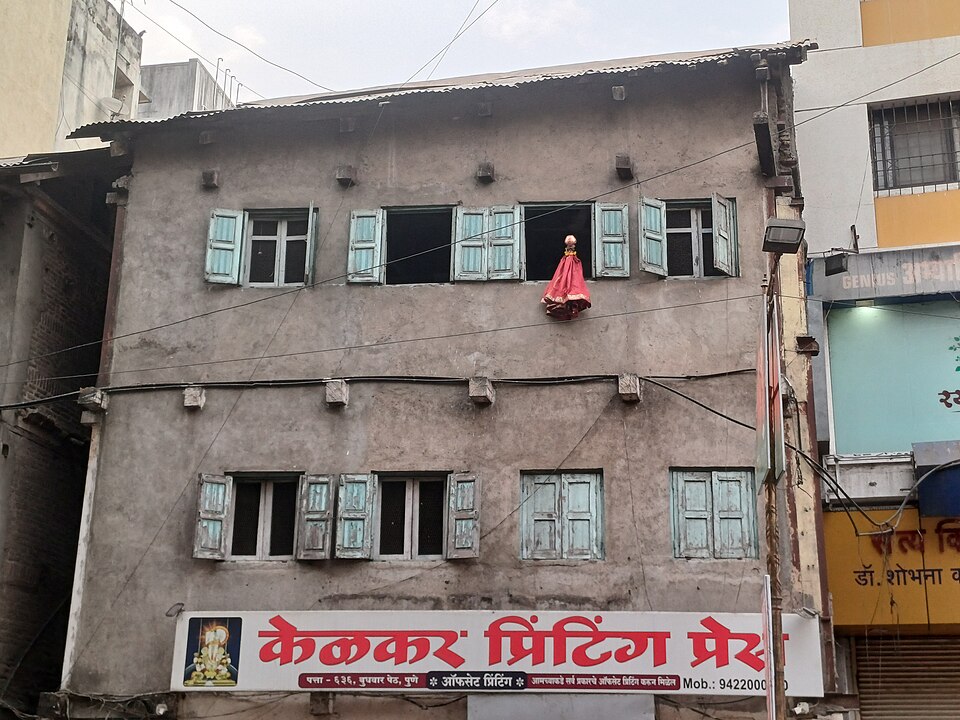
A gudi raised at a doorway or window is one of the recognisable signs of Gudi Padwa in Maharashtra. Its cloth, vessel and decorative elements make the new year visible in a domestic space. Looking closely at that arrangement is a better introduction than treating the day only as a large street procession.
Identify the object
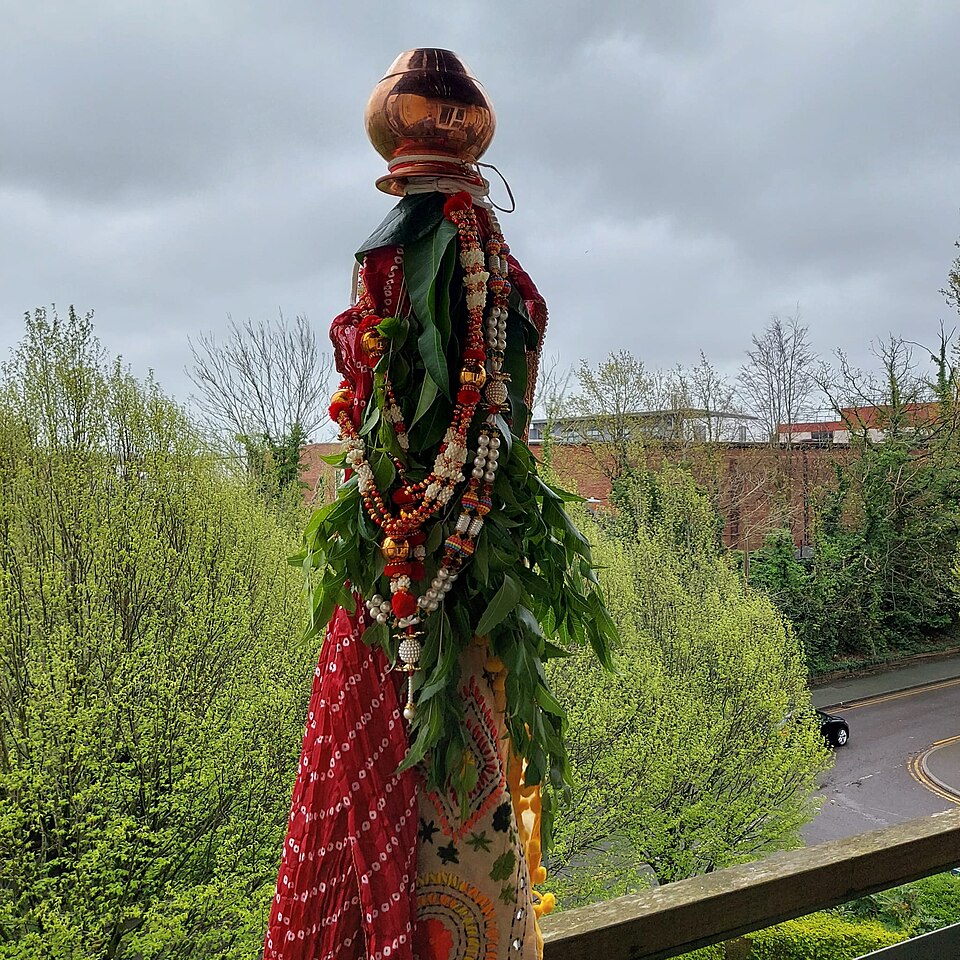
A gudi commonly includes cloth attached to a pole, a vessel placed above it and additional decorations. Materials and arrangement vary among families. Before assigning a symbolic meaning to every piece, ask how the makers describe their own practice.
Photographs can flatten the object into a bright vertical shape. Look at how it is supported and where it stands in relation to the house. The doorway or balcony is part of its setting, not merely a convenient background for a portrait.
A beginning shared with others
Gudi Padwa marks a new year in the Marathi calendar tradition. Household worship, food, greetings and visits can be as important as public events. Processions may include music, costume and performances, but their scale should not make a quiet home observance seem less complete.
If visiting, ask which part of the day the family would like you to join. Offering practical help and listening to a remembered custom can be more welcome than arriving with a checklist of rituals taken from another region's website.
Several explanations can coexist
People may connect the gudi with victory, auspiciousness or particular sacred and historical narratives. An article should identify whose explanation it is presenting rather than claiming that one story exhausts the meaning of the object.
This is also a useful moment to distinguish Gudi Padwa from other new-year observances occurring around the same season. Shared timing does not make recipes, calendar vocabulary and local associations identical. Comparison is most interesting when it preserves those differences.
Photograph a practice, not just a spectacle
Ask before photographing a private home or someone performing worship. Include the place and year in your caption, and do not use an old procession picture as evidence of a current programme. If the image shows a public event, name it accurately.
A small family record might preserve how the gudi was assembled and who explained its parts. These details can be passed on long after a general festival greeting is forgotten. They make the new year tangible through an object, a household and the relationships around it.




